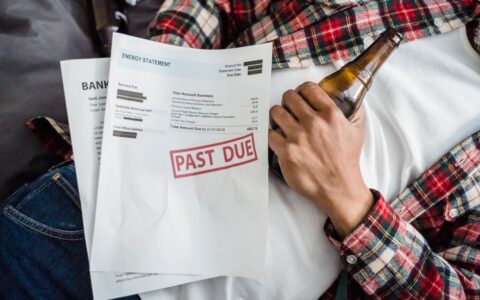
Many Americans pay their bank every month without realizing it. Here is a look at the most common checking account fees and practical ways to stop paying them for good.

The Most Common Checking Account Fees
Monthly maintenance fees are the most widespread charge. Many traditional banks charge a set amount each month simply to keep a checking account open, often ranging from about 5 to 15 dollars, unless you meet certain requirements.
Overdraft fees are among the most expensive. When you spend more than your available balance and the bank covers the transaction, it may charge a flat fee for each item, and several small purchases in one day can trigger several separate charges.
Nonsufficient funds fees apply when the bank declines a payment because your balance is too low. Some banks have eliminated these fees in recent years, but others still charge them, particularly for returned checks and failed electronic payments.
ATM fees can come from two directions. Your bank may charge you for using an out-of-network machine, and the machine owner may add its own surcharge, so a single cash withdrawal can cost several dollars in total.
Other fees include charges for paper statements, wire transfers, stop payment requests, cashier checks and early account closures. Each one may seem small, but together they can quietly add up to a significant amount every year.
How Much Fees Really Cost
A 12 dollar monthly maintenance fee adds up to 144 dollars a year. Over a decade, that is more than 1,400 dollars paid for an account that many other institutions offer completely free of charge.
Overdraft fees can be even more costly. Consumer research has shown that a relatively small share of account holders pays the majority of overdraft fees, often people living paycheck to paycheck who can least afford the charges.
A single overdraft day can be expensive. Three small purchases of a few dollars each that push an account negative can trigger three separate overdraft fees, turning a 15 dollar shortfall into a charge of over 100 dollars.
ATM fees add up for people who rely on cash. Paying a few dollars twice a week for out-of-network withdrawals can cost several hundred dollars a year, far more than most people realize when they swipe their card.
Fees also represent opportunity cost. Money lost to bank charges could have gone into an emergency fund, toward paying down debt or into an account that earns interest instead of quietly draining your balance month after month.
How to Avoid Maintenance Fees
Most banks waive monthly maintenance fees if you meet certain conditions. Common requirements include maintaining a minimum daily balance, receiving a set amount in direct deposits each month or linking a savings account at the same bank.
Read the waiver requirements carefully and check whether you already qualify. Many customers pay fees unnecessarily simply because they never set up direct deposit or did not realize their bank offered a waiver at all.
Students, young adults and seniors may qualify for special fee-free accounts. Banks often offer these versions to specific age groups, but you usually need to ask for them rather than waiting for the bank to suggest them.
If you cannot meet the requirements, consider switching accounts. Many banks offer basic checking accounts with no monthly fee, and some are designed specifically for customers who want simple banking without balance minimums.
Asking politely can help too. If you have been a long-time customer and were charged a fee for the first time, calling the bank and requesting a refund often works, particularly if you explain the circumstances clearly.
Stopping Overdraft and ATM Charges
You can opt out of overdraft coverage for debit card purchases and ATM withdrawals. With this choice, transactions that exceed your balance are simply declined instead of approved with a fee, which protects you from costly surprises.
Linking a savings account for overdraft protection is another option. When your checking balance runs short, the bank transfers money from savings to cover the transaction, usually for a smaller fee or no fee at all.
Set up low balance alerts through your bank app. A text or push notification when your balance drops below a chosen amount gives you time to transfer money or adjust spending before a transaction pushes the account negative.
To avoid ATM fees, use the ATM locator in your bank app to find in-network machines, or get cash back when making purchases at grocery stores and pharmacies. Many retailers offer cash back at no charge with a debit card purchase.
Some online banks and credit unions belong to large surcharge-free ATM networks or reimburse ATM fees each month. If you use cash often, choosing one of these institutions can eliminate the problem entirely.
Choosing an Account That Works for You
Online banks frequently offer checking accounts with no monthly fees, no minimum balance requirements and low or no overdraft fees. Because they operate without large branch networks, they can pass those savings on to customers.
Credit unions are another strong option. As member-owned nonprofits, they often charge fewer and lower fees than large commercial banks and may offer more flexible policies for members who run into temporary trouble.
When comparing accounts, review the fee schedule, which banks are required to disclose. Look at maintenance fees, overdraft policies, ATM access, mobile deposit features and whether the account pays any interest on your balance.
Switching banks takes some planning but is not difficult. Open the new account first, move direct deposits and automatic payments over, keep a small cushion in the old account for a few weeks, and then close it once everything has cleared.
Paying your bank every month is rarely necessary. With a little attention to account terms and a few simple settings, most people can bring their banking costs close to zero and keep that money working for them.